Introduction
GDPR compliance has become a critical priority for businesses that collect, process, or store personal data. Organizations handle large volumes of sensitive information, including customer records, payment details, employee data, and business communications. As cyber threats increase and privacy regulations become more stringent, protecting personal data is no longer optional—it’s an essential business responsibility.
The General Data Protection Regulation (GDPR) provides a legal framework for protecting personal data and ensuring organizations process it responsibly. GDPR compliance helps businesses strengthen privacy practices, improve transparency, and meet regulatory obligations.
Introduced by the European Union (EU), GDPR came into effect on 25 May 2018. It applies not only to organizations within the EU but also to businesses worldwide that offer products or services to EU residents or monitor their behavior.
Failure to follow GDPR regulations can result in significant financial penalties, reputational damage, and loss of customer trust. On the other hand, organizations that achieve GDPR compliance demonstrate their commitment to data security, privacy, transparency, and responsible data management.
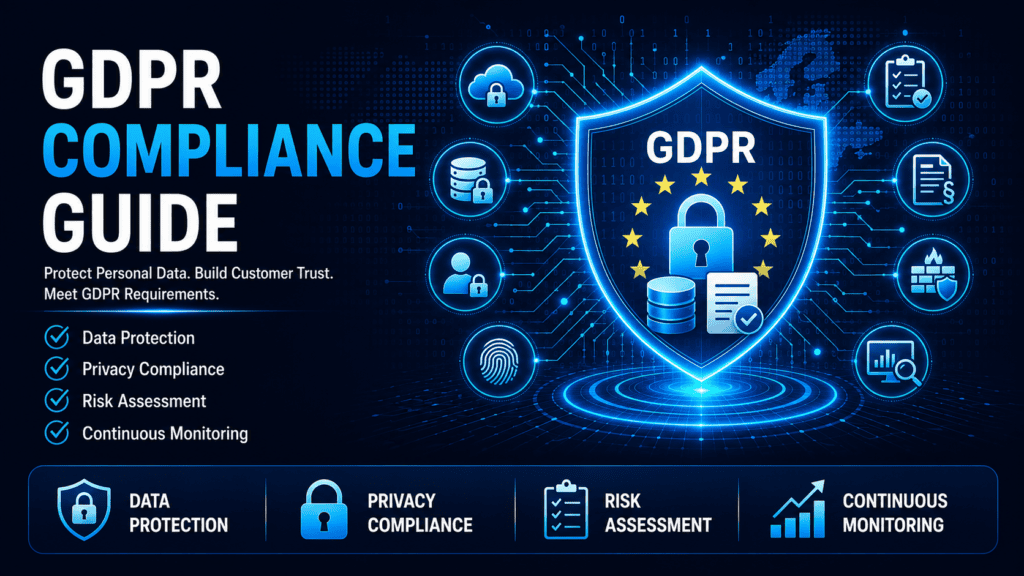
In this comprehensive GDPR Compliance Guide, you’ll learn what GDPR compliance is, why it matters, the key GDPR compliance requirements, implementation steps, best practices, common challenges, and how your organization can build a strong data protection framework.
Table of Contents
1. What is GDPR Compliance?
2. Why Is GDPR Compliance Important?
3. Who Needs GDPR Compliance?
4. Understanding Key GDPR Requirements
5. GDPR Compliance Checklist for Businesses
6. GDPR Audit Process Explained
7. Common GDPR Compliance Mistakes
8. Benefits of GDPR Compliance
9. Best Practices for Long-Term Security
10. How Cyber Guardians Can Help
11. FAQs
12. Conclusion
What Is GDPR Compliance?
GDPR compliance is the process of ensuring that an organization collects, processes, stores, and protects personal data in accordance with the General Data Protection Regulation (GDPR). It requires businesses to implement legal, technical, and organizational measures that safeguard personal information while respecting the privacy rights of individuals.
GDPR came into effect on 25 May 2018 and applies to organizations within the European Union (EU) as well as businesses outside the EU that offer goods or services to EU residents or monitor their online behavior.
Examples of personal data protected under GDPR include:
• Name and surname
• Email address
• Phone number
• Home or business address
• IP address
• Location data
• Financial information
• Health records
• Online identifiers (cookies, device IDs, etc.)
Achieving GDPR compliance means more than creating privacy policies. Organizations must establish secure processes for collecting, storing, using, sharing, and deleting personal data while ensuring individuals can exercise their rights under the regulation.
Although GDPR originated in the European Union, its impact extends globally. Any organization that offers products or services to EU residents or monitors their behavior may need to follow GDPR regulations.
Why Is GDPR Compliance Important for Businesses?
GDPR compliance is more than a legal requirement. It helps organizations protect sensitive information, reduce cybersecurity risks, strengthen customer confidence, and demonstrate responsible data management. Businesses that invest in privacy and security are better prepared to meet regulatory expectations and adapt to evolving digital threats.
Here are some key reasons why GDPR compliance is important:
1. Builds Customer Trust and Confidence
Customers are more likely to do business with organizations that handle their personal information responsibly. Demonstrating GDPR compliance shows a commitment to privacy, transparency, and data security, which can strengthen customer relationships and improve brand reputation.
2. Protects Against Cyber Threats
GDPR encourages organizations to adopt stronger security controls such as encryption, multi-factor authentication (MFA), access controls, and regular security assessments. These measures help reduce the risk of data breaches, ransomware attacks, and unauthorized access to sensitive information.
3. Helps Avoid Regulatory Penalties
Depending on the severity of the violation, organizations may face substantial financial penalties and regulatory action. Maintaining GDPR compliance helps reduce these risks while demonstrating accountability.
4. Improves Business Reputation
Organizations that prioritize privacy are often viewed as more trustworthy by customers, investors, and business partners. A strong reputation for protecting data can also support business growth and strengthen long-term relationships.
5. Creates Better Data Management Practices
GDPR encourages businesses to understand what data they collect, why they collect it, and how long they need to retain it.
Better visibility into data collection, storage, and retention enables organizations to reduce unnecessary risks, improve operational efficiency, and make informed decisions about how information is managed.
6. Supports International Business Growth
Many organizations work with customers, suppliers, and partners across different countries. Implementing GDPR compliance demonstrates that your business follows recognized privacy standards, making it easier to establish trust in international markets.
Who Needs GDPR Compliance?
GDPR compliance applies to any organization that collects, processes, stores, or shares the personal data of individuals located in the European Union (EU). It doesn’t matter whether the business is based inside or outside the EU. If you handle the personal data of EU residents, GDPR may apply to your organization.
GDPR applies to a wide range of organizations, including:
| Industry | Why GDPR Applies |
|---|---|
| SaaS Companies | Store customer accounts and user information |
| E-commerce Businesses | Collect names, addresses, and payment details |
| Healthcare Organizations | Process sensitive health information |
| Financial Institutions | Handle banking and identity data |
| Marketing Agencies | Process customer databases and analytics |
| Educational Platforms | Store student and employee records |
| Cloud Service Providers | Host and process customer data |
| Technology Companies | Develop applications that collect user information |
Your business may need GDPR compliance if it:
✔ Sells products or services to customers in the European Union
✔ Accepts registrations or inquiries from EU residents
✔ Uses cookies or analytics tools to monitor visitor behavior
✔ Processes employee information belonging to EU residents
✔ Stores customer data in cloud applications
✔ Runs online marketing campaigns targeting EU audiences
Understanding GDPR Compliance Requirements
Every organization must evaluate its own processes, but several important GDPR compliance requirements apply broadly across industries.
1. Transparency in Data Processing
Organizations must clearly explain how personal data is collected, processed, and used.
Businesses should maintain transparent privacy policies that explain:
• What information is collected
• Why the information is required
• How the data is stored
• Who can access it
• How long it is retained
2. Obtaining Proper User Consent
User consent is a fundamental requirement of GDPR when organizations rely on permission to process personal information. Consent must be obtained through a clear, informed, and voluntary process.
Businesses must ensure that individuals understand what they are agreeing to before their data is collected.
| Valid Consent | Invalid Consent |
|---|---|
| Clear agreement | Pre-selected boxes |
| Specific purpose | General approval |
| Easy withdrawal | Difficult cancellation |
| User understands | Hidden information |
Pre-selected consent boxes or unclear privacy notices do not meet GDPR expectations.
3. Implementing Strong Data Protection Measures
GDPR requires organizations to implement appropriate technical and organizational measures based on the level of risk associated with the personal data they handle.
Examples of Security Controls:
✔ Data encryption – protects information from unauthorized access
✔ Multi-factor authentication (MFA) – prevents unauthorized account access
✔ Endpoint protection – secures employee devices
✔ Network monitoring – detects suspicious activity
✔ Vulnerability assessments – identifies security weaknesses
Effective GDPR data protection requires continuous improvement rather than a one-time compliance exercise.
4. Reporting Data Breaches
Under GDPR regulations, organizations must have procedures for identifying and responding to security incidents.
A proper incident response plan helps businesses:
• Detect breaches quickly
• Reduce potential damage
• Notify relevant authorities when required
• Protect affected individuals
5. Respecting Individual Data Rights
GDPR gives individuals greater control over their personal information by providing specific rights regarding how organizations collect and use their data.
| GDPR Right | Meaning |
|---|---|
| Right of Access | Individuals can request their personal data |
| Right to Rectification | Users can correct inaccurate information |
| Right to Erasure | Users can request deletion of data |
| Right to Restrict Processing | Users can limit how data is used |
| Right to Data Portability | Users can receive their data in a usable format |
Businesses must have processes in place to handle these requests efficiently.
6. Accountability and Documentation
GDPR follows the principle of accountability, meaning organizations must not only comply with privacy requirements but also demonstrate that they are complying.
Businesses should maintain:
✔ Data processing records
✔ Privacy policies
✔ Risk assessments
✔ Employee training records
✔ Vendor agreements
GDPR Compliance Checklist for Businesses
A GDPR compliance checklist provides organizations with a practical roadmap for identifying privacy gaps, improving data protection practices, and preparing for GDPR audits. By following a structured checklist, businesses can evaluate their policies, security controls, employee awareness, and overall compliance readiness.
Data Assessment and Data Mapping
✅ Identify all types of personal data collected
✅ Document where data is stored (cloud, databases, devices)
✅ Identify employees and systems with access
✅ Map how data moves across internal and external systems
✅ Review third-party vendors handling personal information
Privacy Policies and Documentation
✅ Create clear privacy notices
✅ Explain why data is collected
✅ Define the legal basis for processing
✅ Document retention periods
✅ Update policies when business processes change
Consent Management
✅ Obtain clear and informed user consent
✅ Maintain consent records
✅ Allow users to withdraw consent easily
✅ Avoid unnecessary data collection
✅ Review cookie consent practices
Technical Security Controls
✅ Implement data encryption
✅ Enable multi-factor authentication (MFA)
✅ Perform regular vulnerability assessments
✅ Maintain endpoint protection
✅ Monitor suspicious activities
✅ Control user access permissions
✅ Maintain secure backups
Employee Training and Awareness
✅ Train employees on data handling practices
✅ Educate staff about phishing attacks
✅ Define security responsibilities
✅ Conduct regular awareness sessions
✅ Maintain training records
Third-Party Risk Management
✅ Identify vendors processing personal data
✅ Review vendor security practices
✅ Establish Data Processing Agreements (DPAs)
✅ Verify compliance responsibilities
✅ Monitor vendor risks regularly
Continuous Monitoring and Reviews
✅ Conduct periodic GDPR assessments
✅ Review security controls
✅ Update policies
✅ Monitor regulatory changes
✅ Perform internal audits
A GDPR compliance checklist provides a practical roadmap for businesses working toward stronger privacy and security standards.
GDPR compliance is an ongoing process, not a one-time activity.
GDPR Compliance Audit: How the Process Works
A GDPR compliance audit is a structured evaluation of an organization’s privacy practices, data processing activities, security controls, and documentation to determine whether they align with GDPR requirements. An audit helps businesses identify compliance gaps, reduce privacy risks, and create a roadmap for improving their data protection framework.
Achieving GDPR compliance isn’t a one-time project. As your business grows, introduces new technologies, or processes additional personal data, your compliance posture should evolve as well.
A well-planned GDPR compliance audit allows organizations to identify weaknesses before regulators, customers, or attackers do.
Below is a practical step-by-step audit process.
Step 1: Create a Data Inventory
The first step of a GDPR audit is understanding what personal data your organization collects and manages. Without visibility into your data, it is difficult to protect it effectively.
Ask questions like:
• What personal information do we collect?
• Where is it stored?
• Who has access?
• Why do we collect it?
• How long do we keep it?
• Is it shared with third parties?
Documenting these answers provides visibility into your organization’s data lifecycle.
Step 2: Map Data Flows
Data mapping helps organizations understand where information enters the business, how it moves between systems, and where it is ultimately stored or deleted.
This helps identify unnecessary data transfers and potential security risks.
Step 3: Review Privacy Policies
Privacy documentation should accurately reflect real business practices. A policy that does not match actual data processing activities can create compliance risks.
Your privacy policy should clearly explain:
• What data you collect
• Why you collect it
• Legal basis for processing
• Data retention period
• Individual rights
• Contact information
• Cookie usage
Avoid legal jargon whenever possible. A privacy notice should be understandable to the average user.
Step 4: Evaluate Security Controls
Technical safeguards are a critical part of GDPR data protection.
| Security Control | Purpose |
|---|---|
| Encryption | Protect sensitive information |
| MFA | Prevent unauthorized access |
| Access Controls | Limit unnecessary permissions |
| Logging | Track system activity |
| Backups | Support recovery after incidents |
| Monitoring | Detect suspicious behavior |
Security controls should be reviewed regularly to address emerging threats.
Step 5: Assess Third-Party Vendors
Many organizations share personal data with external service providers.
Review whether vendors:
• Follow GDPR requirements
• Have appropriate security certifications
• Sign Data Processing Agreements (DPAs)
• Report security incidents promptly
• Maintain adequate cybersecurity controls
Third-party risk management is often overlooked but is a vital part of maintaining compliance.
Step 6: Test Your Incident Response Plan
A documented response plan ensures employees know their responsibilities before, during, and after a security incident.
Incident response should define:
• Who manages the incident
• Who communicates with customers
• Who reports to authorities
• How evidence is collected
• How recovery is performed
Regular testing helps ensure your team can respond effectively during real-world incidents.
Step 7: Document Everything
GDPR follows the principle of accountability, meaning organizations must be able to demonstrate that they are following appropriate privacy and security practices.
Maintain records of:
• Processing records
• Risk assessments
• Audit reports
• Employee training evidence
• Vendor agreements
• Security reviews
Good documentation demonstrates that your organization takes privacy and compliance seriously.
Common GDPR Compliance Mistakes Businesses Should Avoid
Many organizations fail to achieve effective GDPR compliance because they focus only on documentation instead of building a complete privacy and security framework. Compliance requires ongoing management of data, technology, processes, and employee awareness.
Common mistakes include:
Ignoring Data Mapping and Data Visibility
One of the biggest GDPR challenges businesses face is not knowing what personal data they collect, where it is stored, who can access it, or how it is shared. Without proper data mapping, organizations cannot effectively protect information or respond to data requests.
Collecting More Personal Data Than Necessary
GDPR follows the principle of data minimization, meaning organizations should only collect information that is necessary for a specific purpose. Keeping unnecessary data increases privacy risks and expands the potential impact of a security incident.
Lack of Employee Security Awareness
Employees regularly handle customer and business information, making security awareness a critical part of GDPR compliance. Without proper training, mistakes such as phishing responses, accidental sharing, and incorrect data handling can create serious risks.
Failing to Assess Third-Party Vendors
Many businesses share personal information with external vendors, cloud providers, and service partners. If these third parties have weak security practices, they can introduce compliance and privacy risks.
Treating GDPR Compliance as a One-Time Project
GDPR compliance is not something organizations complete once and forget. Changes in technology, business operations, regulations, and cyber threats require continuous monitoring and improvement.
Using Improper Consent Practices
GDPR requires organizations to obtain clear and informed consent when consent is the legal basis for processing personal data. Confusing consent forms, pre-selected options, or difficult withdrawal processes can create compliance issues.
Not Having an Incident Response Plan
Organizations must be prepared to identify and respond to security incidents quickly. Without a documented incident response plan, businesses may struggle to reduce damage and meet GDPR notification obligations.
Benefits of GDPR Compliance
GDPR compliance provides businesses with benefits beyond meeting legal requirements. A strong GDPR program helps organizations improve data security, strengthen customer relationships, reduce operational risks, and create better processes for managing personal information.
Compliance delivers benefits beyond avoiding penalties.
1. Builds Customer Trust and Brand Credibility
Customers want confidence that their personal information is handled responsibly. Organizations that demonstrate strong data privacy practices can build trust, improve customer loyalty, and strengthen their reputation in competitive markets.
Example: An online store that clearly explains its privacy practices and protects customer information is more likely to gain customer confidence.
2. Strengthens Cybersecurity Protection
GDPR encourages organizations to implement stronger security measures that protect sensitive information from unauthorized access, misuse, and cyber threats.
Organizations can improve security through:
• Encryption
• Multi-factor authentication (MFA)
• Access controls
• Vulnerability assessments
• Security monitoring
3. Improves Data Governance and Visibility
GDPR requires organizations to understand what data they collect, why they collect it, where it is stored, and how long it should be retained. This creates better visibility and improves overall data management.
Benefits:
• Better data organization
• Reduced duplicate information
• Improved decision-making
• Easier compliance reporting
4. Reduces Legal and Operational Risks
A structured GDPR compliance program helps businesses reduce the likelihood and impact of privacy incidents, regulatory issues, and operational disruptions.
Examples:
• Data breaches
• Compliance failures
• Customer complaints
• Financial losses
5. Competitive Advantage
Privacy and security have become important factors in business decisions. Organizations that demonstrate mature GDPR practices can build stronger relationships with customers, partners, and enterprise clients.
6. Supports Business Expansion
Businesses operating internationally often need to demonstrate strong privacy practices when working with customers, partners, and vendors. GDPR compliance can help organizations build confidence in new markets.
7. Creates Clear Internal Responsibilities
GDPR encourages organizations to define who is responsible for handling data, managing risks, responding to incidents, and maintaining documentation. Clear responsibilities improve security awareness across teams.
GDPR Best Practices for Long-Term Compliance
Maintaining GDPR compliance requires continuous effort. Organizations must regularly review their policies, security controls, data processing activities, and employee practices to ensure they continue protecting personal data effectively.
Conduct Regular Risk Assessments
Regular risk assessments help organizations identify privacy and security weaknesses before they become serious problems. Businesses should evaluate changes in technology, business processes, vendors, and cyber threats that may affect personal data protection.
Perform Data Protection Impact Assessments (DPIAs)
A Data Protection Impact Assessment (DPIA) helps organizations identify and reduce privacy risks before introducing activities that may involve sensitive or high-risk data processing.
Appoint a Data Protection Officer (DPO) When Required
Some organizations may need to appoint a Data Protection Officer (DPO) to oversee privacy responsibilities, monitor compliance activities, and act as a point of contact for regulatory authorities.
Build Privacy by Design Into Business Processes
Privacy by design means organizations consider data protection requirements from the beginning of a project rather than adding security measures after implementation.
Regularly Test Incident Response Plans
Having an incident response plan is not enough. Organizations should regularly test their procedures to ensure employees understand their responsibilities during a real security incident.
Add testing activities:
• Simulated breach exercises
• Communication testing
• Recovery testing
• Post-incident reviews
Keep Compliance Documentation Updated
GDPR requires organizations to demonstrate accountability. Maintaining accurate records helps prove that privacy and security measures are implemented effectively.
How Cyber Guardians Helps Organizations Achieve GDPR Compliance
Achieving GDPR compliance requires more than creating policies and documents. Organizations need a practical approach that combines data protection strategies, security assessments, risk management, and continuous improvement.
Cyber Guardians helps organizations strengthen their GDPR compliance journey by identifying security gaps, improving protection measures, and building stronger data governance practices.
Our GDPR compliance support helps businesses address key areas such as:
• Security assessments
• Risk identification
• Data protection strategies
• Compliance guidance
• Vulnerability management
• Security improvement recommendations
Our GDPR Compliance Approach
Step 1: Assess
Review current data practices, security controls, and compliance maturity.
Step 2: Identify Gaps
Identify weaknesses in policies, processes, technology, and documentation.
Step 3: Improve Controls
Recommend security improvements aligned with business requirements.
Step 4: Maintain Compliance
Support ongoing monitoring, reviews, and continuous improvement.
By combining cybersecurity best practices with compliance expertise, Cyber Guardians helps businesses create a stronger foundation for protecting customer and business data.
Whether you are starting your GDPR compliance journey or looking to improve existing security practices, having the right cybersecurity partner can make the process more efficient and effective.
Frequently Asked Questions (FAQs)
1. What is GDPR compliance?
GDPR compliance is the process of ensuring that an organization collects, processes, stores, and protects personal data according to the requirements of the General Data Protection Regulation (GDPR). It helps businesses protect individual privacy, reduce security risks, and demonstrate responsible data management practices.
2. Who needs GDPR compliance?
Organizations that process the personal data of individuals located in the European Union (EU) may need to comply with GDPR, even if the organization itself is located outside Europe. This includes businesses that sell products, provide services, or monitor the behavior of EU residents.
3. What are the main GDPR compliance requirements?
The main GDPR compliance requirements include transparent data processing, obtaining valid consent, protecting personal information, respecting individual rights, maintaining documentation, and implementing appropriate security controls.
4. How much does GDPR compliance cost?
The cost of GDPR compliance depends on several factors, including organization size, the amount of personal data processed, existing security controls, technology environment, and the level of compliance support required.
5. How can a company prepare for a GDPR audit?
A company can prepare for a GDPR audit by reviewing data processing activities, creating a data inventory, updating privacy documentation, assessing security controls, reviewing vendors, and conducting internal compliance reviews.
6. Does GDPR apply to companies outside Europe?
Yes. GDPR can apply to organizations outside the European Union if they offer products or services to EU residents or monitor their behavior. GDPR focuses on protecting the personal data of individuals rather than the physical location of the business.
Conclusion
Data privacy is no longer optional. Customers, regulators, and business partners expect organizations to take security seriously.
GDPR compliance helps businesses protect sensitive information, reduce cyber risks, improve customer trust, and meet important regulatory expectations.
By understanding GDPR compliance requirements, following a structured GDPR compliance checklist, and investing in professional GDPR compliance services, organizations can build a stronger and more secure future.
Cybersecurity is an ongoing journey. Businesses that prioritize GDPR data protection today will be better prepared to handle tomorrow’s digital challenges.
Partnering with Cyber Guardians can help your organization strengthen its security framework and move confidently toward effective GDPR compliance.